

Why This Ancient Way of Being Needs a Very Modern Business Strategy
I recently came across a term that made me stop mid-scroll and say, oh… that’s me.
Multipotentialite.
Emilie Wapnick coined the term multipotentialite around 2010 to describe people with diverse interests, creative pursuits, and no single “one true calling.” Her work focuses largely on non-linear career paths and permission to explore.
What feels less explored is the next layer of multipotentiality: not just having many interests, but the capacity to synthesise them, in other words, to integrate skills, disciplines, and ways of thinking into something cohesive, valuable, and strategically held.
At first glance, this term sounds similar to multipassionate. But it’s actually something quite different. And once you understand the distinction, a lot of business frustration suddenly makes sense.
The idea of the multipotentialite isn’t new. It’s just been wearing outdated (and frankly unhelpful) names.
Historically, these people were called Renaissance men. A term I’m not especially fond of. A little sexist. And a little narrow.
You may also have heard the term ” polymath” describing someone with deep knowledge and skill across multiple disciplines.
Different labels. Same essence.
A person whose brilliance lies not in doing one thing forever, but in weaving many things together.
Multipassionate vs Multipotentialite: The Key Difference
This distinction matters more than most people realise.
A multipassionate person often has lots of interests, but those interests tend to come and go. They burn bright, then fade. The person moves on before the interest becomes deeply embedded in their life or work.
This is about desire. Emotional energy. Curiosity.
A multipotentialite, on the other hand, doesn’t lose interest. They accumulate, stay curious, keep learning and build skill on skill on skill.
What defines a multipotentialite isn’t just liking many things, but rather having the capacity to develop competence across domains and to integrate those domains in original ways. They see patterns others miss. They connect ideas instinctively.
That integration is the magic.
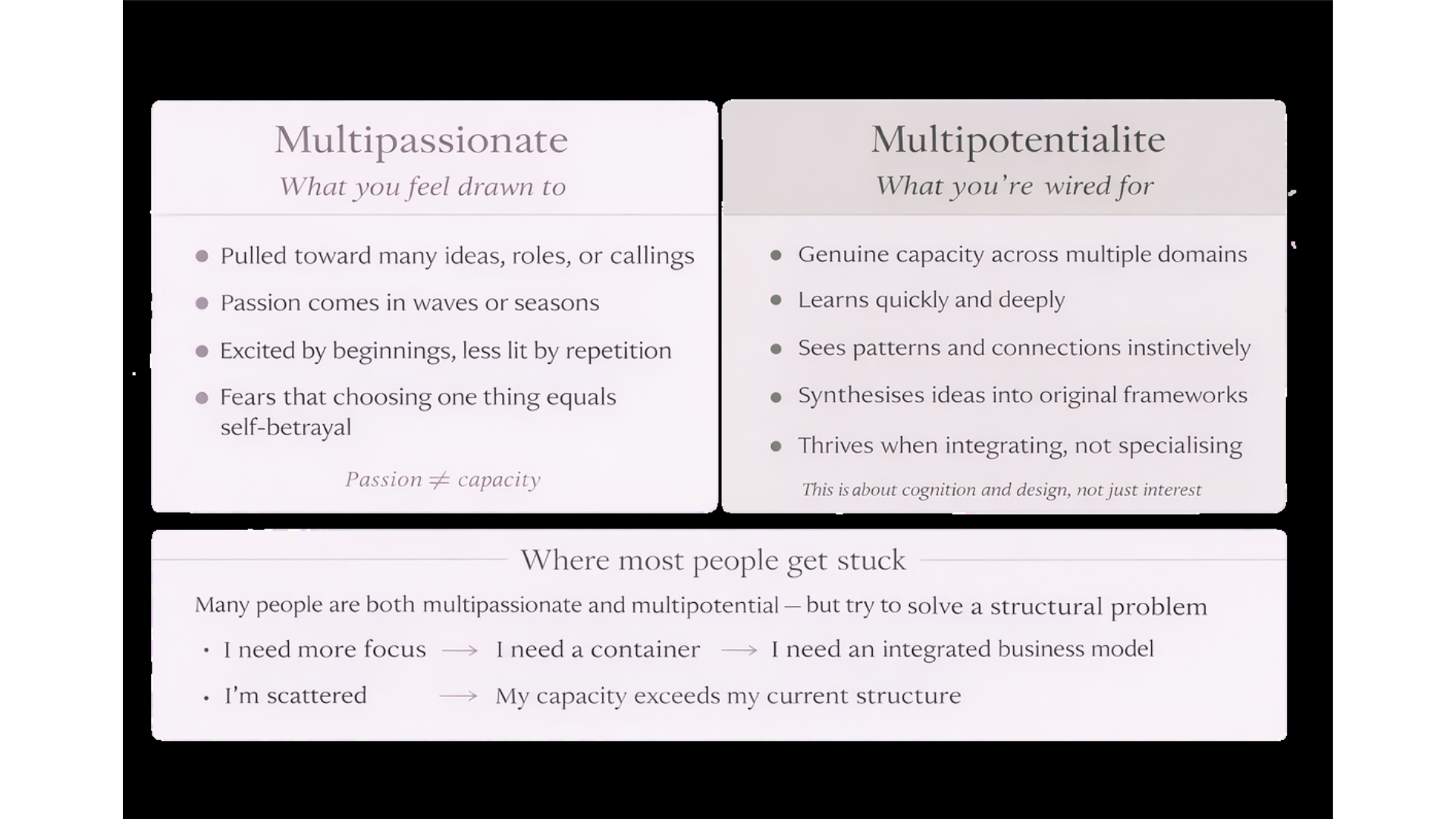
For me, that has looked like weaving together business strategy, astrology, pattern recognition, systems thinking, intuition, teaching, and facilitation. Not randomly. Not all at once. But intentionally, over time, into something cohesive.
And I’ve noticed something important about my clients, particularly those inside my mastermind.
They’ve spent years being told they’re scattered. Flighty. Unfocused. That they “just need to pick a lane.”
In reality, they’re gifted multipotentialites trying to run businesses designed for specialists.
The Real Problem Multipotentialites Face in Business
The problem for multipotentialites is not having too many interests or skills it’s how they try to turn those capacities into a business.
Most multipotentialites do what seems logical at first.
They list everything they can do.
They create services pages with ten, twelve, sometimes fifteen different offerings. Readings. Coaching. Sessions. Workshops. Courses. Consulting. Intensives. Masterminds. Retreats. Mentoring. You name it.
From their perspective, it feels honest. Inclusive. Efficient.
From a client’s perspective? It’s overwhelming.
Decision fatigue sets in almost immediately. There’s no clear starting point. No obvious “this is for me” moment.
So the potential client clicks away. Not because the work isn’t powerful, but because the choice architecture is broken.
This is where many multipotentialites internalise the wrong conclusion.
They think:
- My messaging must be bad
- I’m not niche enough
- I need to simplify myself
What actually needs simplifying is the structure, not the person.
The Strategy Multipotentialites Actually Need
Multipotentialites don’t need fewer skills. They need integrated pathways.
Instead of offering a menu of disconnected services, what works is creating clear, holistic journeys clients can step into.
Experiences where:
- your many capacities are woven together behind the scenes
- the client only has one or two obvious decisions to make
- your zone of genius is felt without being listed
This allows you to stay in creative flow, keep your work energising, and avoid boredom or burnout while your clients experience clarity, safety, and trust.
You still get to use everything you are. The difference is that it’s held inside a coherent container.
This is especially important for sensitive, intuitive, neurodivergent, or energetically aware clients. Too many options doesn’t feel empowering. It feels destabilising.
Structure creates relief.
Why “Pick a Lane” Is Bad Advice for Multipotentialites
Telling a multipotentialite to pick a single lane is like telling a river to stop branching.
You don’t remove the nature of the system. You guide it.
When multipotentialites are forced into rigid models, one of two things happens:
- they get bored and quietly sabotage the business
- they fragment themselves across too many offers and exhaust their audience
Neither leads to sustainable growth.
But when the strategy matches the wiring, something shifts.
Decisions feel lighter, marketing gets clearer, clients understand what you do without you over-explaining, and your creativity finally has somewhere to land.
Where Multipotentialites can thrive
This is one of the core things I support clients with inside the AstroBiz Mastermind.
Not diluting their gifts or narrowing themselves down to something that feels deadening, but designing a business model that can actually hold the full spectrum of who they are.
If you’ve ever been told you’re “too much” or “too many things” for business… chances are, you’re not.
You’re just running the wrong strategy.
If this resonates join the mastermind waitlist and we can talk about what an integrated, sustainable structure could look like for you.
You don’t need to become less; you need a container that knows how to hold more.